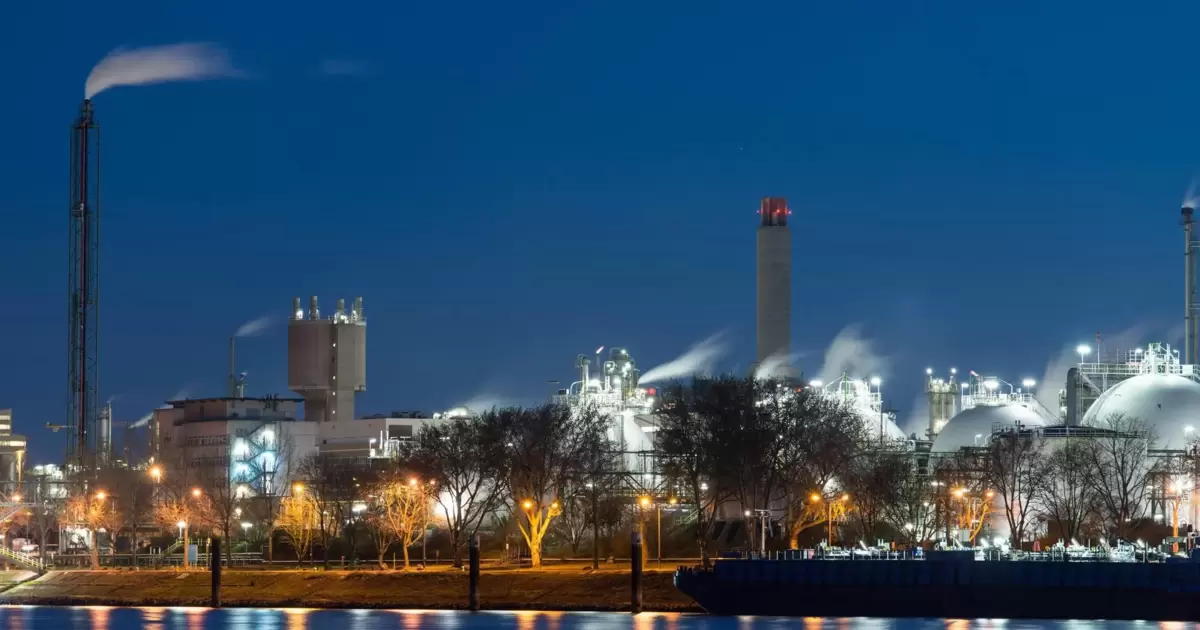
Worker Seriously Injured After 4-Meter Fall at BASF Ludwigshafen
A recent incident at BASF's sprawling Ludwigshafen site has once again underscored the critical importance of stringent safety protocols in large industrial environments. An employee of an external firm sustained severe injuries after a fall of approximately four meters while conducting roof work in the northern section of the plant. This grave incident, classified as a significant work accident at BASF leading to serious injury (arbeitsunfall basf schwerverletzte), has initiated a thorough investigation by relevant authorities, aiming to ascertain the precise circumstances that led to the worker's devastating fall.
The chemical giant, a cornerstone of the German industrial landscape, frequently navigates complex operational challenges. However, the recurrence of serious workplace incidents prompts a closer examination of safety measures, particularly when third-party contractors are involved in specialized tasks.
Details Emerge on the 4-Meter Fall Incident
The unfortunate event unfolded on a Saturday morning, specifically October 23rd, within the expansive Werksteil Nord sector of the BASF plant in Ludwigshafen. At around 11:00 AM, an employee contracted by an external company was performing essential roof maintenance. During these works, the individual fell approximately four meters, suffering severe injuries upon impact. The immediate response was critical: BASF's on-site emergency medical team, including an emergency physician, provided swift initial medical care at the scene. Following stabilization, the severely injured worker was transported to a nearby hospital for comprehensive treatment and was admitted for inpatient care.
The exact cause of this alarming fall remains under active investigation. Authorities have been informed and are working to piece together the sequence of events, scrutinize safety procedures in place for working at height, and determine if any breaches of industrial safety regulations occurred. Such investigations are paramount not only for accountability but also for implementing corrective actions to prevent similar incidents in the future. The physical and psychological toll on the injured worker and their family is immeasurable, highlighting the profound human impact of workplace accidents.
A Pattern of Incidents: Broader Safety Concerns at BASF Ludwigshafen
The recent 4-meter fall is not an isolated event but rather another entry in a concerning series of serious workplace incidents reported at the BASF Ludwigshafen complex. Just months prior, another severe accident unfolded in the same Werksteil Nord, injuring multiple workers. On Thursday, April 9th, four employees of external companies were injured, with two sustaining severe injuries, following the unexpected rupture of an empty fire extinguishing pipeline. This incident occurred during sealing work on a newly constructed fire extinguishing ring line that was not yet in operation and thus contained no water. The burst pipeline, with a diameter of 40 centimeters, caused significant damage and immediate danger to those working nearby.
Investigations into the pipeline incident by the responsible trade supervisory authority, the SGD Süd in Neustadt, confirmed the cause. Construction activities at the affected site were temporarily halted, and the area was secured and cordoned off to ensure no further risks. BASF confirmed the diameter of the pipeline but refrained from providing further details on the accident's progression. The injured workers, again from external firms, received immediate first aid from BASF's emergency medical personnel. The two severely injured individuals were hospitalized, while the other two received outpatient treatment. These incidents, particularly their occurrence at the same Werksteil Nord and involving external contractors, raise important questions about overarching safety management and oversight at such a large and complex industrial site. For more detailed information on these recurring issues, readers can refer to BASF Ludwigshafen: Multiple Severe Work Accidents Raise Safety Concerns and Four Injured: Burst Pipeline Incident at BASF Ludwigshafen Investigated.
Mitigating Risks: Best Practices for Working at Height in Industrial Settings
Working at height, particularly on structures like roofs within a bustling industrial complex, inherently carries significant risks. Falls from height consistently rank among the leading causes of serious injuries and fatalities in the workplace. To prevent such severe work injuries (schwerverletzte arbeitsunfall), companies must implement robust preventative measures:
- Comprehensive Risk Assessments: Before any work commences, a thorough risk assessment must identify all potential hazards related to working at height, including access points, fall distances, fragile surfaces, and weather conditions.
- Fall Protection Systems:
- Guardrails and Barriers: Where possible, collective fall protection measures like sturdy guardrails, toe-boards, and safety nets should be prioritized.
- Personal Fall Arrest Systems (PFAS): For tasks where collective protection isn't feasible, individual systems comprising a full-body harness, a lanyard, and an anchorage point are essential. These must be regularly inspected and workers properly trained in their use.
- Safe Access and Work Platforms: Ensure workers use stable and secure access equipment such as scaffolding, elevated work platforms, or mobile scissor lifts. Ladders should only be used for short-duration tasks and secured properly.
- Training and Competency: All personnel involved in working at height, especially external contractors, must receive specialized training, be certified competent for their tasks, and fully understand site-specific safety protocols.
- Equipment Inspection and Maintenance: All fall protection equipment, tools, and access gear must be regularly inspected by competent persons and maintained in good working order. Damaged equipment must be immediately removed from service.
- Emergency Response Planning: A clear and practiced plan for rescuing an injured worker from height is crucial, as delayed response can exacerbate injuries.
The integration of these measures creates a multi-layered safety net, significantly reducing the likelihood of a worker falling and sustaining serious injuries.
The Critical Role of Contractor Safety Management in Industrial Plants
Large industrial sites like BASF Ludwigshafen frequently rely on external contractors for specialized tasks, maintenance, and construction projects. While this brings expertise and flexibility, it also introduces complexities in safety management. The repeated involvement of external firms in the Ludwigshafen incidents underscores the vital need for stringent contractor safety management programs:
- Rigorous Contractor Vetting: Companies must thoroughly vet contractors based on their safety records, management systems, and demonstrated commitment to safety before awarding contracts.
- Clear Contractual Safety Requirements: Contracts should explicitly detail all safety requirements, including compliance with site-specific rules, provision of appropriate PPE, and adherence to safe work procedures.
- Site-Specific Inductions and Training: All contractor personnel must undergo comprehensive site-specific safety inductions, familiarizing them with unique hazards, emergency procedures, and access restrictions within the plant.
- Permit-to-Work Systems: Robust permit-to-work systems are essential for hazardous activities, ensuring all risks are assessed, controls are in place, and authorization is granted before work begins.
- Supervision and Oversight: Adequate supervision from both the contracting company and the client (e.g., BASF) is crucial to monitor contractor compliance with safety standards and identify potential deviations.
- Open Communication Channels: Foster an environment where contractors feel empowered to report hazards, near misses, and safety concerns without fear of reprisal.
Effective contractor safety management is not just about compliance; it's about integrating external teams into the overall safety culture of the site, ensuring everyone operates under the same high safety standards to prevent a serious work accident at BASF (arbeitsunfall basf) and protect every individual on site from becoming seriously injured (schwerverletzte).
Conclusion: Prioritizing Safety in Complex Industrial Environments
The serious injury sustained by a worker in the 4-meter fall at BASF Ludwigshafen serves as a stark reminder of the continuous and unyielding commitment required for industrial safety. While investigations are ongoing, the incident, coupled with previous accidents involving external contractors, emphasizes the multifaceted challenges inherent in managing safety at vast chemical facilities. It reinforces the imperative for both facility operators and contracting firms to consistently review, update, and rigorously enforce safety protocols, particularly concerning high-risk activities like working at height and complex infrastructure projects. The well-being of every worker, whether direct employee or contractor, must remain the paramount concern, driving continuous improvement in hazard identification, risk mitigation, and emergency preparedness to prevent future work accidents at BASF resulting in serious injury (arbeitsunfall basf schwerverletzte) and foster a truly safe working environment for all.